
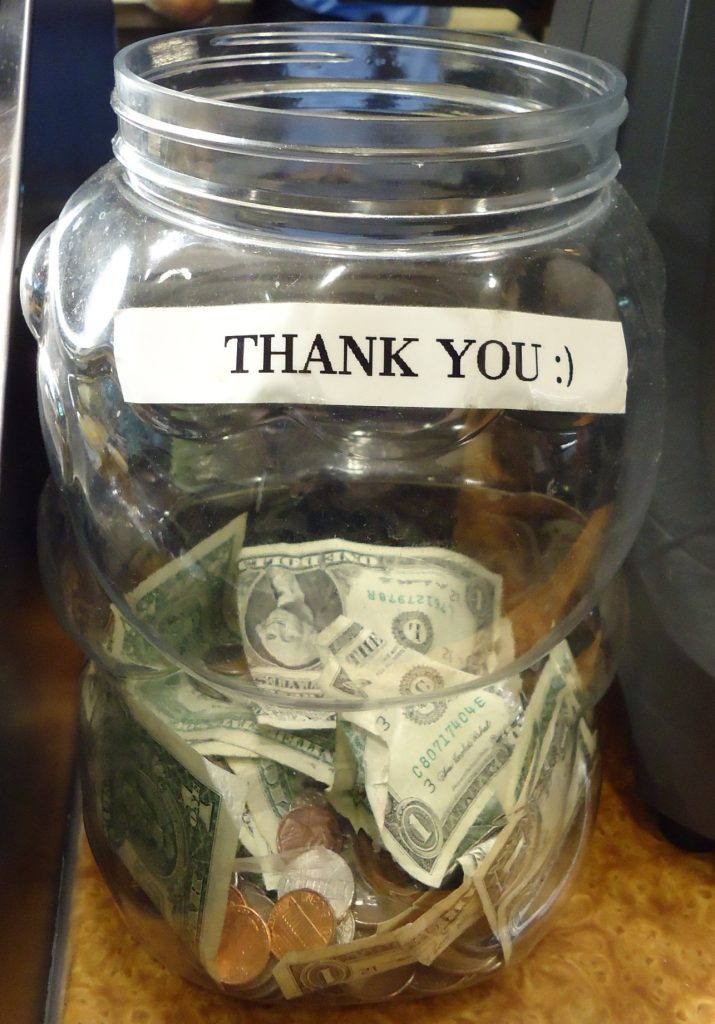
Under the federal tax law enacted on July 4, 2025 (Public Law 119-21, widely known as the One Big Beautiful Bill Act, whose provisions the IRS now describes as the “Working Families Tax Cuts”), many workers who receive tips can deduct a large part of that tip income on their federal return. The deduction first applied to 2025 returns filed earlier this year. For 2026, employers must report tips in a new way on Form W-2, so it is worth understanding the rules before your next return. Here is what tipped workers, and the businesses that employ them, should know.
The basics
- Up to $25,000 a year. Eligible workers can deduct qualified tips of up to $25,000 per return for each tax year from 2025 through 2028. Under current law the deduction ends after 2028.
- You do not have to itemize. The deduction is available whether you take the standard deduction or itemize. It is figured on Schedule 1-A, “Additional Deductions,” which is attached to Form 1040.
- Income limit. The $25,000 maximum is reduced by $100 for every $1,000 of modified adjusted gross income (MAGI) above $150,000, or above $300,000 on a joint return. For example, a single filer with MAGI of $160,000 is $10,000 over the threshold, so the maximum deduction drops by $1,000, to $24,000.
- Social Security number and filing status. You need a valid Social Security number, and married couples must file a joint return to claim the deduction.
What counts as a “qualified tip”
Not every dollar called a tip qualifies. To count, a tip must be:
- Cash or charged. Tips paid in cash or added to a card payment count, including tips you receive through a tip-sharing arrangement with co-workers. Non-cash items, such as tickets or goods, do not.
- Voluntary. The customer must be free not to pay it, the amount must not be negotiated, and the customer decides how much to give. Mandatory service charges and automatic gratuities added to a bill generally do not qualify.
- Earned in a tipped occupation. The tips must be received in an occupation that customarily and regularly received tips on or before December 31, 2024. Treasury and the IRS publish the list of qualifying occupations at IRS.gov/TippedOccupations.
- Outside a “specified service” business. Tips received in a specified service trade or business (fields such as health, law, accounting, consulting, financial services, performing arts and athletics) do not qualify.
If you are self-employed and receive tips, the deduction cannot exceed your net income from the business in which you earned them.
New for 2026: your W-2 will show tips separately
For 2025, employers were not required to report qualified tips separately, and the IRS allowed workers to figure the amount from existing records such as the tips shown in box 7 of the W-2. Beginning with 2026 wages, the IRS instructions for Form W-2 require employers to report:
- The total cash tips you reported to your employer, in box 12 using code TP; and
- A Treasury Tipped Occupation Code in new box 14b, identifying the occupation in which you received the tips. If any of your tips were received in an occupation that does not qualify, the employer must also enter the code “000.”
When your 2026 W-2 arrives early next year, look at these boxes. If an amount or occupation code looks wrong, ask your employer for a corrected form before you file.
What the deduction does not do
- It does not remove payroll taxes. Tips are still generally subject to federal income tax withholding and to Social Security and Medicare taxes. The deduction lowers your federal income tax when you file your return; it does not change your paycheck unless you adjust your withholding. If you expect a large deduction, you can give your employer a new Form W-4.
- It does not change the reporting rules. If you receive $20 or more in cash tips in a month, you must report them to your employer in writing by the 10th of the following month. Smaller amounts must still be reported as income on your return.
- It does not apply on your California return. The Franchise Tax Board’s summary of the federal law (last updated October 2026) states that California does not conform to the tips deduction. Tips remain fully taxable for California income tax purposes.
Steps to take now
- Keep a daily tip log. Record cash and charged tips, and any amounts you share with or receive from co-workers. Good records support your deduction if the IRS asks.
- Report all your tips to your employer. Tips you do not report will not appear in box 12 of your W-2.
- Check that your occupation qualifies. Look up your job on the IRS list of tipped occupations, especially if you work in a salon, spa, or other setting where both services and tips are common.
- Watch the income limit. If your household income is near $150,000 (single) or $300,000 (joint), year-end decisions such as pre-tax (traditional) retirement contributions can affect how much of the deduction you keep.
- Plan for the state return. Because California taxes your tips, make sure your state withholding or estimated payments cover the California tax.
Sources
- IRS: Working Families Tax Cuts – Individuals and workers
- IRS: What the “No tax on tips” deduction means for you
- IRS: 2026 General Instructions for Forms W-2 and W-3 (box 12 code TP, box 14b)
- IRS: Schedule 1-A (Form 1040), Additional Deductions
- IRS: Topic no. 761, Tips – withholding and reporting
- Congress.gov: Text of H.R. 1 (Public Law 119-21), section 70201
- California Franchise Tax Board: Summary of Federal Income Tax Changes
Tips can be tricky, and the new rules add another layer. If you would like help applying them to your situation, please contact the office or call us at (858) 549-1295.
This article provides general information as of October 2026 and is not tax advice for your specific situation. Tax rules change, and the right answer depends on your facts.